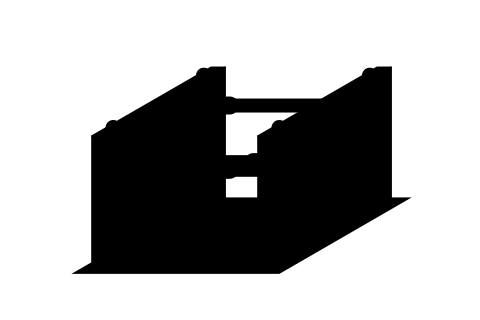
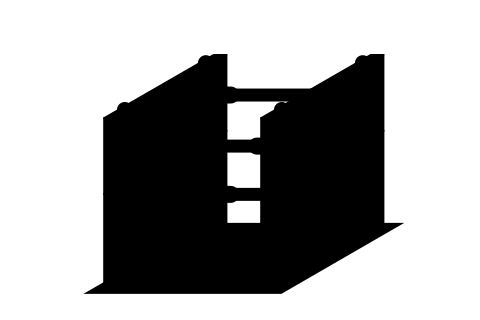
Identify the assembly
Set aside one delivered assembly and its paperwork. Compare what arrived with what one applicable drawing calls for. A delivery ticket can establish that two panels arrived; it cannot establish that those panels belong together or which spreaders, fasteners and extensions go with them. [2] [3]
An extra spreader on the truck
In the drawing, the pipes span between the two panels. On a delivery sheet, count and identify what arrived separately from what the unit drawing calls for; an extra pipe has no assigned position merely because it arrived with the box. [2] [3]
Suppose five spreaders arrive and the drawing shows four. The delivery establishes that five arrived, not that the fifth belongs on this assembly. Its marking and the applicable drawing matter more than the count on the ticket. [3]
Resolve a mismatch against the right design basis
For manufacturer’s tabulated data, match the serial or configuration and follow all specifications, recommendations and limitations. A departure requires the manufacturer’s specific written approval. File the exact approval with the written data at the jobsite during construction of the system. Approval for a different box or a previous change is not approval for this one. [2]
If the design uses other tabulated data, identify the engineer-approved tables, their parameters and limits. For an engineer-designed assembly, identify the written plan, component sizes, types and configurations, and the registered professional engineer who approved it. Do not use a manufacturer’s family brochure to fill a gap in either route. [2]
A matching part can still be damaged
Record damage separately from identity. A matching panel can still be damaged. A competent person must evaluate damaged protective-system equipment; if suitability cannot be assured, remove it from service until a registered professional engineer evaluates and approves it for return. [2]
A documented match answers only “Did we receive the parts this drawing specifies?” It does not establish suitability for the site, replace the competent person’s inspection of the excavation, adjacent areas and protective systems, or authorize anyone to enter. [1] [2]
Sources
- 29 CFR 1926.651: Specific excavation requirementsOccupational Safety and Health Administration
- 29 CFR 1926.652: Requirements for protective systemsOccupational Safety and Health Administration
- Pro-Tec Pro Series steel trench shields — selected document and spreader contextPro-Tec Equipment