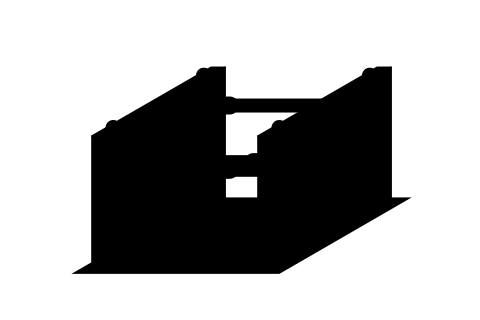
Does “8” describe the wall?
Kundel lists the Titan Plus 8 side wall as 8½ inches. The model name is not the wall measurement, and neither is a depth or load rating. [4]
OSHA's 1926.650 definitions help separate the terms behind a trench box wall label. A shield is a structure that resists cave-in forces and protects workers inside it; the standard notes that trench boxes and trench shields are the usual names for such shields in trenches. Shoring is a separate category: it supports the excavation sides and is designed to prevent cave-ins, and it includes metal hydraulic, mechanical and timber systems. A shield may be temporary or permanent. A wall label on a shield therefore does not turn the shield into a shoring system or supply a shoring specification. [1]
Reading wall, socket, pounding-pad and cutting-bar entries separately
In Kundel’s listing, “8” belongs to the product name; the side-wall measurement belongs to a labeled field. Keep the headings when copying the figures: a socket size or a pad thickness measures a different piece, even when all three values use inches. [4]
Kundel lists an 8½-inch side wall on the Titan Plus 8. The other dimensions belong to different parts: a 7-inch socket, 1½-inch pounding pads, a 3-inch solid stacking lug bar and a ½ × 3-inch cutting bar. The socket size does not specify the connection geometry or the mating spreader. [4]
For the rating, use the design data for the identified model and configuration, not the component dimensions in a sales listing. [4]
Where a rated configuration and its limits are documented
Under 1926.652(a)(2), a protective system must resist without failure all loads intended or reasonably expected to be applied to it. The Titan’s listed wall dimension does not establish that performance for a particular arrangement. [3] [4]
Under the manufacturer's tabulated data route in 1926.652(c)(2), a trench box design must follow all of the manufacturer's specifications, recommendations and limitations, and any deviation needs the manufacturer's specific written approval. The written specifications and any approval must be at the jobsite during construction of the trench box, then available to the Secretary on request. For construction planning with trench boxes, the practical questions are which document applies, at which revision, for which configuration and within which limits. [3]
Other design routes for trench boxes and aluminum hydraulic shoring for a trench excavation carry their own paperwork. Designs from other tabulated data (c)(3) must identify the parameters that affect selection, including soil conditions, the limits of use and explanatory information, and name the registered professional engineer who approved the data. Designs using none of the listed options (c)(4) need that engineer's approval and a written plan showing sizes, types and configurations plus the engineer's identity. Section 1926.650 defines tabulated data as tables and charts approved by a registered professional engineer. [3] [1]
The two engineering roles are easy to conflate. A competent person can identify existing and predictable hazards and is authorized to take prompt corrective measures. A registered professional engineer is registered in the state where the work is performed, with the standard's provision for engineers approving manufactured protective systems or tabulated data for interstate use. Under OSHA 1926.651(k), inspections of a trench excavation and its protective systems, and removal of employees from hazardous areas, fall to the competent person. [1] [2]
Weight, inside clearance and handling: what to request for the exact unit
Ask for the assembled weight, inside clearance, spreader locations and included parts for the unit on offer. A side-wall dimension supplies none of these. [4]
Handling a trench box at the excavation site has separate requirements. No worker may be under loads handled by lifting or digging equipment (1926.651(e)), and workers must stand away from a vehicle being loaded or unloaded. Shield systems used in trenches may not be loaded beyond what they were designed to withstand, must be installed so as to restrict lateral or other hazardous movement under sudden lateral loads, and must be empty of employees during installation or removal, or when moved vertically (1926.652(g)). For the machine in use, ask for the exact lift chart and handling documents; do not infer capacity or rigging from the wall label. [2] [3]
Condition belongs in the same trench excavation request. Materials and equipment must be free of damage or defects that could impair function, and manufactured items must be used and maintained consistently with the manufacturer's recommendations under OSHA 1926.652(d). If the competent person cannot assure that a damaged trench box is suitable for safe continued use, it is removed from service and must be evaluated and approved by a registered professional engineer before returning. [3]
Sources
- 29 CFR 1926.650: Scope, application, and definitions applicable to this subpartOccupational Safety and Health Administration
- 29 CFR 1926.651: Specific excavation requirementsOccupational Safety and Health Administration
- 29 CFR 1926.652: Requirements for protective systemsOccupational Safety and Health Administration
- Titan Series Mainline Steel Trench ShieldsKundel