What does a lightweight shield weigh?
Before comparing weights, find out what would actually be lifted. A pair of walls is a different load from a box with spreaders and attachments fitted. The word “lightweight” does not tell you which one the supplier weighed. [1] [2] [3] [4] [5] [7]
Weight example: Pro-Tec PAL excludes the spreaders
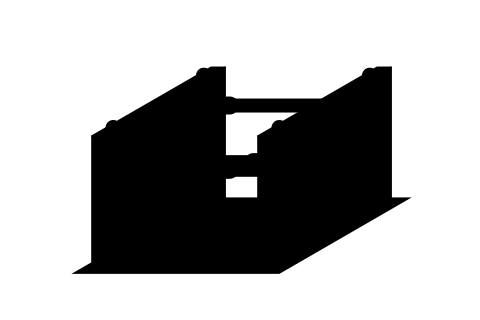
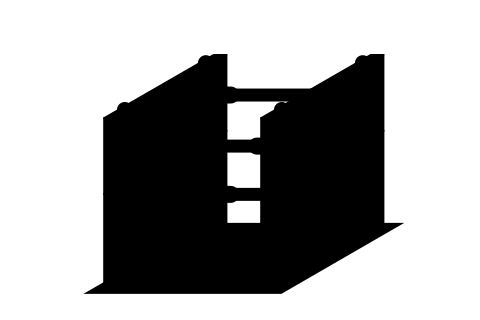
In this generic steel box, the spreaders are visible between the two walls. That distinction matters when reading Pro-Tec’s PAL table: the published shield weight covers the pair of sidewalls, not everything shown here. The drawing is not a PAL model or a lifting specification. [7]
Pro-Tec lists its 3-inch and 4-inch PAL shields in separate tables. Height, length, inside width and collar choices identify the row; the footnote explains what its weight includes. [7]
The double asterisk means two sidewalls without spreaders. Pro-Tec lists spreader sets separately by pipe schedule and notes their pins and keepers. The sidewall figure alone is therefore not the assembled weight. [7]
Will the joint fit under the spreader?
Check the opening where the joint will actually be made. A pipe may fit between the walls and still strike a spreader at the connection. Do not assume the spreader can be moved. [1] [3] [7]
Even when the pipe fits, match the proposed configuration to the governing design and actual site loads. Under the manufacturer-data route, departures from the manufacturer’s specifications, recommendations or limitations require specific written manufacturer approval. A lower listed weight says nothing about a permissible load on the shield. [3]
Handling and occupancy
Use the lift chart for the machine as equipped. Bobcat identifies boom and arm length, bucket weight and quick coupler among the configuration details on compact excavator charts. Its published capacities assume a flat, level surface and measure height at the bucket pivot pin. [6]
Lift radius from the swing centerline, lift direction, lift height and blade position affect the chart reading. Compare the complete intended load with the capacity for those conditions, not with the machine’s operating weight. [6] [5]
Section 1926.652(g)(1)(iv) prohibits employees in shields being installed, removed, or moved vertically. That is a movement restriction, not a ban on occupancy after installation. Employees must also be protected when entering or leaving shield protection. [3]
Sources
- 29 CFR 1926.650: Scope, application, and definitions applicable to this subpartOccupational Safety and Health Administration
- 29 CFR 1926.651: Specific excavation requirementsOccupational Safety and Health Administration
- 29 CFR 1926.652: Requirements for protective systemsOccupational Safety and Health Administration
- Preventing Worker Deaths from Trench Cave-ins (NIOSH Workplace Solutions 2011-208)CDC and NIOSH
- Finding Your Excavator Lift CapacityCaterpillar
- Compact Excavator Safety 101: Calculating Lift CapacityBobcat Company
- Pro-Tec trench shielding and shoring brochure — selected PAL section and publication contextPro-Tec Equipment