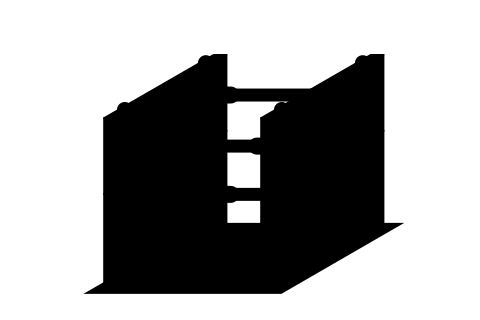
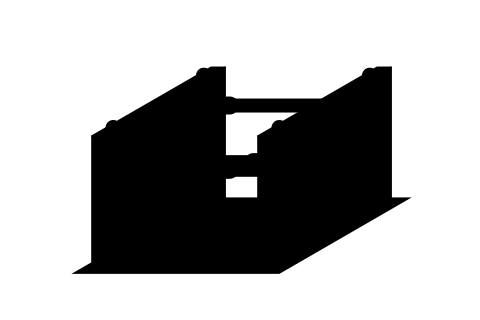
A shield protects people; shoring supports the excavation sides
“Steel” tells you what a unit is made of, not what it protects. Ask what is supposed to remain safe if the excavation sides become unstable: the people within a protective structure, or the ground itself? [1]
| System | Intended function | What not to assume |
|---|---|---|
| Steel shield (trench box) | Withstands cave-in forces to protect employees within it. | It does not shore the ground or protect a worker outside the shielded area. |
| Steel shoring | Supports the sides of the excavation and is designed to prevent cave-ins. | Support for trench sides does not by itself establish support for an adjoining structure. |
“Support system” is broader than trench-side shoring. Under OSHA’s definition it can include underpinning, bracing or shoring that supports an adjacent structure, an underground installation or the excavation sides. Identify which of those the design actually serves. [1]
Example: a trench beside an existing foundation
The shield and the foundation have different jobs. Knowing what protects the worker inside the shield does not establish what carries the adjoining footing. [1] [2] [3]
A crew working inside a shield alongside a foundation has two questions. Can the shield protect the people in that work position from cave-in forces? And will the foundation stay stable as the excavation proceeds? Even a documented answer to the first question says nothing about what is carrying the building. [1] [2] [3]
Where excavation endangers an adjoining building, wall or other structure, OSHA requires a support system such as shoring, bracing or underpinning to ensure stability for employee protection. Excavation below a footing where a hazard could reasonably be expected is subject to additional conditions. Identify the applicable protection or determination for the foundation; do not record the crew’s shield as that answer. [2]
Use the design to identify the system and its limits
Ask for the model or unit ID, the assembly drawing and the applicable design data. Match the delivered members and configuration to the document. Look for the stated purpose, the loads it is designed to resist and the conditions and limits of use. An invoice reading “steel shoring” settles none of these questions. [1] [3]
The categories do not have completely separate design rules. Section 1926.652(c) groups support systems, shields and other protective systems for design. For a steel system, the basis may be applicable manufacturer’s tabulated data, other tabulated data approved by a registered professional engineer, or an engineer-approved design. The timber and aluminum hydraulic shoring appendix provisions are not design tables for a steel shield. [3]
Use requirements then depend on the system. For example, a shield must be installed to restrict hazardous movement under sudden lateral loads, and workers must be protected from cave-ins when entering or exiting its protected area. For support systems, §1926.652(e) addresses how support members are connected, installed and removed. Start with the documented function; do not choose the use rules from the name on the order. [3]
Sources
- 29 CFR 1926.650: Scope, application, and definitions applicable to this subpartOccupational Safety and Health Administration
- 29 CFR 1926.651: Specific excavation requirementsOccupational Safety and Health Administration
- 29 CFR 1926.652: Requirements for protective systemsOccupational Safety and Health Administration