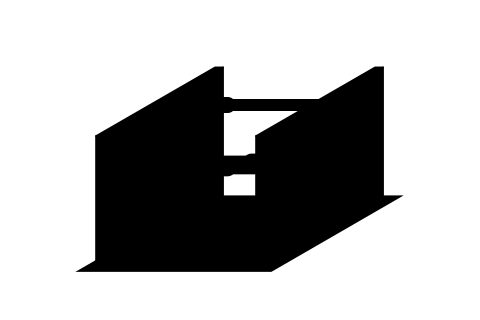
Two adjustments on a V-Panel shield
Kundel describes vertically adjustable panels and telescoping end beams that change the frame width. Confirming one setting does not establish that the proposed combination is documented or that the utility has adequate clearance. [5] [3] [2]
On Kundel’s V-Panel, individual panels move vertically, while telescoping end beams change the frame width. A panel that can move past a crossing does not establish the clear opening or a permitted combination of settings. Check the proposed crossing against the drawing and applicable data for the assembly on site. [5] [3]
Under OSHA's definitions, a shield is built to resist cave-in forces and protect workers inside it, and trench shields are often called trench boxes. An aluminum trench box is therefore a shield, not a shoring system. Shoring supports the excavation sides; a shield protects the space within it and does not support the utility, the soil behind its panels or an adjacent structure. [1]
Clearance and support at the crossing
An adjustable panel can change the opening, but its range does not set the clearance required around a utility. Nor does the shield establish what supports the pipe. The service location and the proposed arrangement both need confirmation. [3] [2]
Confirm the service location
Before excavation, estimate where underground utilities run and contact the owners within established or customary local response times. If owners cannot respond within 24 hours, unless a longer period is required by state or local law, or cannot establish the exact location, the employer may proceed only with caution using detection equipment or other acceptable means. As the trench approaches a utility, establish its exact location by safe and acceptable means before setting a box or shoring system. [2]
A locate ticket and a pothole result differ, and a crossing decision for modular aluminum trench boxes usually needs the second. Keep both with the project file, and plan heavy duty equipment routes away from the trench edge so the box setting can be checked against a confirmed location. [2] [4]
Match the configuration to the drawing
Which configurations do the written data permit? For an aluminum box designed under OSHA's manufacturer-data option, follow all of the manufacturer's specifications, recommendations and limits for the system. Obtain specific written manufacturer approval for a deviation and keep the written data and approvals at the jobsite during construction. Ask how the allowed panel settings, frame widths, connections and end beams apply to the trench boxes being assembled. [3]
OSHA requires protective-system materials and equipment to be free of damage or defects that could impair function; damaged equipment must be examined by a competent person and removed from service unless suitability can be assured. Before assembling the modular aluminum trench box, record the two trench walls, the aluminum panels and shield, corner posts, pin connections, heavy duty lifting lugs, adjustable spreader options and stacking hardware or stacking guides the documents identify. Keep that written document for the trench box on hand. For example, a pin or spreaders from other boxes cannot be assumed approved for this modular box. Check the configurations in the written data. [3]
What the crossing sketch shows
A crossing sketch can bring the verified service location and elevation together with the proposed shield position. Distinguish what was confirmed in the field from what the design drawing permits. [2]
The utility owner’s role
Ask the utility owner or operator about required separation and whether the proposed work could load the service. The manufacturer’s drawing addresses a different question: which panel and frame settings the shield design permits. [3] [1] [2]
When the proposed arrangement is outside the data
If the proposed arrangement departs from manufacturer’s tabulated data, that design route requires the manufacturer’s specific written approval. A separate engineer-approved design identifies its materials, arrangement and approving registered professional engineer. [3]
Sources
- 29 CFR 1926.650: Scope, application, and definitions applicable to this subpartOccupational Safety and Health Administration
- 29 CFR 1926.651: Specific excavation requirementsOccupational Safety and Health Administration
- 29 CFR 1926.652: Requirements for protective systemsOccupational Safety and Health Administration
- Preventing Worker Deaths from Trench Cave-ins (NIOSH Workplace Solutions 2011-208)CDC and NIOSH
- V-PanelKundel Industries