Material density, panel weight and assembled weight
Before putting weights side by side, underline what each number describes. Density belongs to a material, the BAB-2 entry belongs to one panel, and the complete weight must identify the particular assembled box. These are three different comparisons, not three numbers to add. [4] [7]
An advertised weight or lightweight claim for an aluminum trench box can describe the aluminum material, one component such as a panel or corner post, or a complete modular shield box assembled for a given trench. Before comparing two modular aluminum box systems for a trench, establish which level the number belongs to. A figure without a model, panel size, component list and document revision is easily mistaken for a comparable one. Project teams, contractors and workers on utility work should record whether the claim covers a two-sided box or another arrangement, and whether components are steel or aluminum; unlike configurations are not comparable. [4] [7]
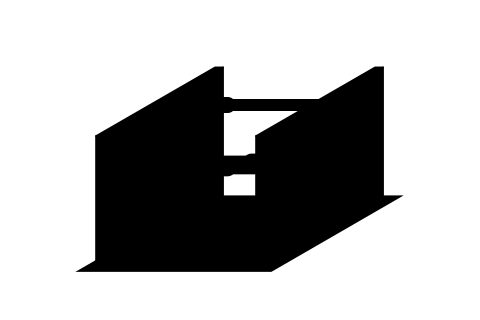
A brochure shows why the levels differ. In the GME Build-A-Box modular aluminum trench shield brochure, a BAB-2 two-foot-high panel is listed at 34 lb and a BAB-C2-2 corner end post is listed at 24 in and 18 lb. Those two separately labeled aluminum component entries for a two-sided modular aluminum trench box are easily mistaken for a box weight. They do not state an assembled box weight, do not establish how many panels, corner posts or spreaders a box configuration uses, and should not be added together or extrapolated into a load. [7]
The assembled figure for an aluminum trench box belongs in manufacturer documentation for the exact model and configuration. Under US federal excavation rules, 29 CFR 1926.652(c)(2) allows a shield design to be drawn from manufacturer tabulated data only when it follows all specifications, recommendations and limitations; deviations require specific written approval. Section 1926.650 defines tabulated data as tables and charts approved by a registered professional engineer. A modular aluminum trench box with no matching data is an unresolved case, not a clearance for workers. [3] [1]
Why Lightweight and Durable Labels Need a Configuration Match
State whether the panels are steel or aluminum. A lightweight or durable claim becomes comparable only when modular configurations match. For a modular aluminum trench box on utility work, record the model, panel height and length, number of side panels, corner posts and their type and length, spreaders and spreader arrangement, lifting points and document revision. The GME Build-A-Box brochure directs users to lift with factory-supplied lift eyes and to follow the manufacturer's tabulated data—directions tied to a named aluminum product family, not to aluminum trench boxes in general. That record gives contractors and workers a like-for-like basis for comparing one two-sided modular aluminum trench box with another, including the end post type where used. [7]
Material references explain why a lightweight or ultra-lightweight label cannot settle an aluminum box's system question. Kobe Steel describes aluminum as roughly one-third the density of copper or iron, with strength adjustable by alloy type and temper. The Australian Aluminium Council notes that the natural oxide film reforms if scratched and that aluminum corrodes only under certain conditions and exposures. Neither statement supplies a panel rating, an assembled box weight or a corrosion guarantee for an aluminum trench box, and neither supports a blanket claim that one lightweight modular aluminum trench box is more durable than another. [4] [5]
Regulatory vocabulary keeps the functions apart. In 1926.650, a shield withstands cave-in forces and protects workers inside it, while shoring supports the sides of an excavation; trench boxes are shields, not shoring. Section 1926.652(g) limits shield loading to design loads and keeps workers out of shields while they are installed, removed or moved vertically. [1] [3]
Condition Evidence: Damage, Exposure and Service History
A durability claim does not tell you what happened to a used shield. Match dated condition, service and repair records to the specific unit, and check the equipment for damage or defects that could impair its function. [3]
Condition records should separate normal surface behavior from damage. A reforming oxide film is expected on aluminum; its presence or absence does not show harm or soundness. Inspection should describe what workers see: permanent deformation, bent or cracked aluminum box panels or corner posts, damaged welds, worn or missing pins, keepers or spreaders, corrosion beyond surface film, prior repairs, and handling incidents such as a dropped or struck box panel. Contractors and workers should date those observations, note the trench wall, trench end and exposure, and keep photographs with the aluminum trench box record; a durable label says nothing about the modular aluminum trench box under review. [5] [4] [7]
Under 1926.652(d)(3), when protective-system equipment is damaged, a competent person asks whether it can support intended loads and whether it is otherwise safe for continued use; if the person cannot assure either point, it is removed from service and must be evaluated and approved by a registered professional engineer before it returns. For a modular aluminum trench box, a missing history is easily misread as a clean record. It is not proof of damage, but it is not a clearance for workers or a substitute for these requirements. [3]
Inspection, Maintenance and Repair Records to Request
Request inspection records first, because 1926.651(k) sets inspection requirements. A competent person inspects the excavation, adjacent areas and protective systems for possible cave-ins, protective-system failure, hazardous atmospheres or other hazardous conditions before work begins, during the shift as needed, and after every rainstorm or similar event; exposed workers are removed until precautions are taken. For a modular aluminum trench box, ask for records giving date, inspector, trench depth, wall conditions and the observed aluminum trench box configuration, including panels, posts and spreaders. Record two points: whether the box was used at the same site and under the same trench and soil conditions as the planned project, and whether workers entering it were protected as described. Keep those trench safety observations with the aluminum box file. [2]
Repair paperwork needs a scope check. The Efficiency Production aluminum welding and skin patching document, marked Revision Two and dated July 28, 2014, instructs users to align parts, refer to applicable drawings before welding and use only parts manufactured or approved by the company; it describes itself as guidelines only. It is a named manufacturer example of specific repair guidance for aluminum components, not permission to repair an arbitrary modular aluminum trench box, other trench boxes, panels, corner posts or spreaders. [6]
Ownership Comparison Without Life Predictions
For contractors, ownership comparisons are defensible when two modular aluminum box systems share a two-sided configuration for the same trench. If one box listing uses a component weight and the other an assembled figure, the numbers are easily confused and not like for like; if one box has current tabulated data and the other none, the documentation gap is the finding. When comparing a modular aluminum box for trench work with other modular trench boxes, record the manufacturer's description of panels, posts and spreaders, and note which product documents are current and available. Keep shield and shoring records separate: do not treat shoring equipment or a shoring system as a shield. For utility work, a lightweight claim does not settle the comparison for workers; a lightweight label is not an assembled figure. Service life, repair intervals and cost differences cannot be derived from the supplied evidence; no source provides them for specific aluminum trench box configurations. [3] [7]
Sources
- 29 CFR 1926.650: Scope, application, and definitions applicable to this subpartOccupational Safety and Health Administration
- 29 CFR 1926.651: Specific excavation requirementsOccupational Safety and Health Administration
- 29 CFR 1926.652: Requirements for protective systemsOccupational Safety and Health Administration
- Characteristics of AluminumKobe Steel, Ltd.
- Aluminium propertiesAustralian Aluminium Council
- Aluminum Welding Typical Instructions and Aluminum Skin Patching Instructions (Revision Two, July 2014)Efficiency Production, Inc.
- Build-A-Box Modular Aluminum Trench Shielding System brochure (2026)Griswold Machine & Engineering / Arcosa Shoring Products