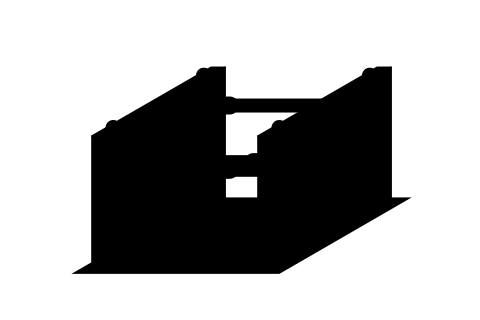
What arrived, and what was the excavation expected to be like?
A model or serial number identifies a starting point. The delivered panels, spreaders and connections must also match the layout in the design record, and the actual excavation must fall within its conditions and limits. [1] [2] [3]
What makes the documents applicable
A matching serial reference answers only the first question. A sheet for that unit can still describe a different spreader layout, and a matching layout does not establish that the excavation presents the loads assumed on the sheet. [2] [3]
The design route then determines which paperwork must travel with trench boxes. Where a trench box design is drawn from a manufacturer's tabulated data, OSHA requires it to follow all of that manufacturer's specifications, recommendations and limitations. Any deviation is allowed only after the manufacturer issues specific written approval. The specifications and approval must be in written form at the jobsite while the system is constructed. [3]
Other routes change the record. Designs using tabulated data other than the manufacturer's must identify the parameters that affect system selection, the limits of use, and explanatory information for correct selection, and must name the registered professional engineer who approved the data. A system designed outside those options needs an engineer's written plan showing sizes, types and configurations, plus that engineer's identity. [3]
Compare the observed ground, water, equipment and edge loads with the design basis. If the sheet is for a different spreader layout or assumes different loads, the equipment name alone does not resolve the mismatch. Identify who can provide the applicable data or design. [2] [3]
Limits the handling review must respect
Two exposure rules frame any handling discussion. No employee is permitted underneath a trench box or other load handled by lifting or digging equipment, and employees must stand away from vehicles being loaded or unloaded to avoid falling or spilled material; operators may stay in cabs only where the vehicle is equipped to protect them. That includes a backhoe or other digging machine: the exclusion area is a design output, not an afterthought. [2]
OSHA's trench box rule is equally direct: employees are not allowed in boxes while those boxes are being installed, removed, or moved vertically. That provision separates handling of boxes from occupied work and shapes the order of operations, crew communication, and the point at which workers may be inside the box. [3]
What remains unknown is substantial. The machine and its configuration, the applicable load chart, the lifting points the trench box manufacturer specifies, the rigging arrangement and the capacity conclusion stay unresolved until the exact box instructions, the lifting-equipment documents and a job-specific assessment are in hand. A generic online sequence or a copied installation guide cannot substitute for any of them, and OSHA does not fill those gaps. [3] [2]
Shoring retains the excavation sides; a shield resists cave-in forces to protect employees inside. The removal provisions for support systems in §1926.652(e) are not removal instructions for a steel shield. Use the records for the actual shield. [1] [3]
Ground, access and handover
A specific allowance governs how far the bottom of a trench box may stand above the floor of the cut. OSHA allows excavating earth to a maximum of two feet below the bottom of a box only where the box is designed to resist the forces calculated for the full depth of the trench, and only where there are no indications, while the trench is open, of possible loss of soil from behind or below the box. Both conditions travel with the box, and neither is optional. [3]
For trenches four feet deep or more, identify the stairway, ladder, ramp or other safe means of egress and the worker’s route to it. The limit is 25 feet of lateral travel to the exit, not a distance between ladders. Account separately for cave-in protection while entering or leaving the shield. [2] [3]
Inspection timing is set by the standard, with one qualifier that is often dropped: these inspections are required only when employee exposure can be reasonably anticipated. Where exposure is anticipated, inspections of the excavation, the adjacent areas and the protective systems take place before work starts, as needed through the shift, and after every rainstorm or other hazard-increasing occurrence. [2]
The follow-through matters as much as the inspection. Where the competent person finds evidence of a possible cave-in, of protective-system failure, of a hazardous atmosphere or of another hazardous condition, removal of exposed employees is required until the necessary precautions have been taken. The competent person is defined by the capacity to identify existing and predictable hazards and the authorization to take prompt corrective measures. [2] [1]
Sources
- 29 CFR 1926.650: Scope, application, and definitions applicable to this subpartOccupational Safety and Health Administration
- 29 CFR 1926.651: Specific excavation requirementsOccupational Safety and Health Administration
- 29 CFR 1926.652: Requirements for protective systemsOccupational Safety and Health Administration