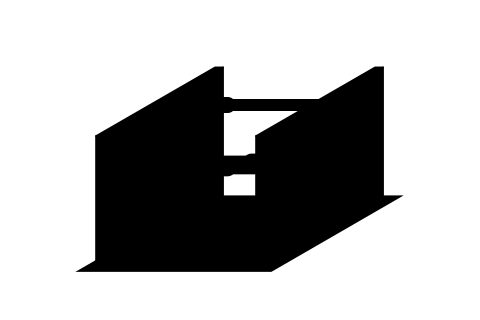
Which unit does the price cover?
A sale listing's label and price are not a substitute for identifying the assembly. OSHA groups trench shields and trench boxes together: a trench shield is built to resist cave-in forces and protect people inside it. Shoring is different; it supports the sides of an excavation to prevent a cave-in. OSHA also defines aluminum hydraulic shoring as aluminum cylinders used with rails, which is not the same product as an aluminum trench box. Ask the supplier which category its product documentation describes. [1]
The first document to request is the manufacturer's written product documentation for the specific model and series: the specifications, recommendations, and limitations that apply to that configuration. Under 29 CFR 1926.652(c)(2), a shield or support system design drawn from manufacturer's tabulated data must follow every specification, recommendation, and limitation the manufacturer issued. Deviations require the manufacturer's specific written approval. That request applies to trench boxes and shoring systems alike, and a marketing page or a family name does not replace the documentation for the actual unit. [3]
What is included in the quoted weight?
Ask the supplier for a complete set of component part numbers, not descriptions alone, and for the model and series. Aluminum trench boxes can differ in panel length and height, side and end panels, corner posts, spreader type, and connections. Ask whether each panel is original, whether the assembly is modular, which panels combine, and whether it can be arranged with other panels. Ask whether each spreader is fixed or adjustable, and request the adjustable spreader's range. List included features—a leg kit, each pin, rigging points, an assembly drawing—and exclusions. A sale offer for a partial shield or shoring system differs from a complete one, even when both are called an aluminum trench box. [3]
Ask for documented weights, features, and each figure's basis. A single number may describe one panel, a modular component, the full assembly, a shipping weight, or a kit with accessories. Request weight per panel, per component, and total assembled weight, and ask what each includes. The same questions apply to steel trench boxes; a lightweight aluminum panel still has a documented weight, and a lightweight claim does not replace full assembly weight. Weight helps handling and transport planning for trench work. It is not a capacity rating and says nothing about loads under 1926.652(a)(2). [3]
Handling needs its own answers. Ask how the manufacturer specifies lifting and rigging for this aluminum trench box configuration. Under 1926.651(e), employees may not stand under loads handled by lifting or digging equipment; 1926.652(g)(1)(iv) bars employees from inside shields while shields are installed, removed, or moved vertically. These limits shape how a trench shield can be moved on a trench site. [2] [3]
Ask About Condition, Modifications, Repair History, and Instructions
Protective-system equipment must be free from damage or defects that could impair its function under 1926.652(d)(1). Ask to view product condition records for the model and series: photographs of panel faces and edges, welds, corner connections, each corner post, each pin, and end frames, plus a statement of cracks, bends, corrosion, or repairs. Ask whether the box was struck, overloaded, or repaired, and who did the work. For used aluminum trench boxes and trench shields, ask how the unit was stored, whether parts were replaced, and whether a sale offer includes original documentation. [3]
Modifications matter more than cosmetics. Ask whether any member was re-welded, re-drilled, straightened, replaced with a non-original part, or otherwise altered. Under 1926.652(c)(2)(ii), a deviation from the manufacturer's specifications, recommendations, or limitations is allowed only after the manufacturer issues specific written approval. Ask for that approval for each change and treat an undocumented alteration as an open question. [3]
Damaged trench box or shoring equipment has its own path. A competent person must examine it and judge whether it remains suitable. If not, it must be removed from service and evaluated and approved by a registered professional engineer before returning. Ask who examined it and what the written outcome was. [3]
Ask also whether the applicable manufacturer instructions will travel with the unit in written form. Section 1926.652(c)(2)(iii) requires those specifications, recommendations, and limitations at the jobsite while the protective system is being constructed, and 1926.652(d)(2) requires manufactured equipment to be used and maintained consistently with the manufacturer's recommendations. [3]
Compare Supplier Answers on the Same Terms
A seller who writes “excluded” has answered the scope question; a seller who leaves a line empty has not. Keep those states apart when comparing a package price, especially when panels are priced but the posts or connections are not itemized. [3]
Compare like assemblies: the same parts, accessories and records, with the weight basis identified. A cheaper offer that omits hardware or lacks a repair record is not equivalent to a complete, documented unit. [3]
A listing for an aluminum trench box for sale is a starting point, not a suitability finding. An aluminum label, low weight, or sale price does not establish suitability. A steel trench box used as a shield falls under the same OSHA definition as an aluminum one; the material does not change the documentation request. A heavy-duty label is not a specification; a heavy-duty claim needs manufacturer product documentation, and a lightweight claim is not a capacity rating, so ask for documented weights. A shield is not a shoring system: shoring supports the trench sides, while a shield protects people inside it. Whether a trench shield fits an excavation depends on manufacturer data, soil and trench depth, and the employer's design approach. Capacity under 1926.652(a)(2) applies regardless of box weight or cost. [3] [1]
Keep Site Conditions and Missing Answers Outside the Sales Comparison
Site conditions sit outside the sale conversation. Before a trench excavation opens, 1926.651(b) requires the estimated location of underground installations to be determined and utility owners contacted. The employer or a designee selects and constructs the protective system for the excavation—shoring, sloping, or a shield—and 1926.652(a)(1) requires each employee in an excavation to be protected from cave-ins except in stable rock or in excavations under five feet where a competent person's examination shows no indication of a potential cave-in. Trench length, depth, and soil conditions belong to that decision, not the offer comparison. [2] [3]
NIOSH's 2011 workplace guidance, which offers recommendations rather than regulation, describes the competent person determining which protective system will be used—a shoring system, sloping, or shielding—and scheduling it to be complete before workers enter. It notes that trenches deeper than 20 feet can be more complex, where a manufactured system with an appropriate depth rating or a registered professional engineer's site-specific design may be needed. [4]
That guidance also advises workers not to enter an unprotected trench even for a short task, and to leave and call the competent person at any sign of a protective-system problem. Those points belong to the jobsite decision, not the offer comparison, and no supplier answer replaces them. [4]
Sources
- 29 CFR 1926.650: Scope, application, and definitions applicable to this subpartOccupational Safety and Health Administration
- 29 CFR 1926.651: Specific excavation requirementsOccupational Safety and Health Administration
- 29 CFR 1926.652: Requirements for protective systemsOccupational Safety and Health Administration
- Preventing Worker Deaths from Trench Cave-ins (NIOSH Workplace Solutions 2011-208)CDC and NIOSH